Spot Repairs and Patch Work
Small leaks, flashing cracks, or a handful of missing shingles typically cost $200–$600 to fix. Most of these are temporary solutions on older roofs.
A leaky roof feels like an emergency, but it is not always one. The decision between patching and replacing depends on a few honest conversations with yourself: How old is the roof? How much damage are we actually looking at? Will this repair hold until I can afford a replacement? We have had to ask ourselves all three questions, and we want to walk you through the decision the way we made it.
The roof that catches a drip today is telling you something about how long it has to live — if you know how to listen.
The right answer depends on the roof's age, the damage's extent, and whether the underlying structure is sound. In our experience, these three things matter far more than the contractor's estimate, because an estimate that keeps a bad roof in place will cost you twice as much in five years.
Roof work ranges from a few hundred dollars for a simple patch to tens of thousands for a full replacement. Understanding what drives the price helps you see whether your estimate is reasonable or if you should get a second opinion.
Small leaks, flashing cracks, or a handful of missing shingles typically cost $200–$600 to fix. Most of these are temporary solutions on older roofs.
Replacing an entire section — say, after storm damage or where the roof is failing in one area — usually runs $1,200–$4,000 depending on the size and slope.
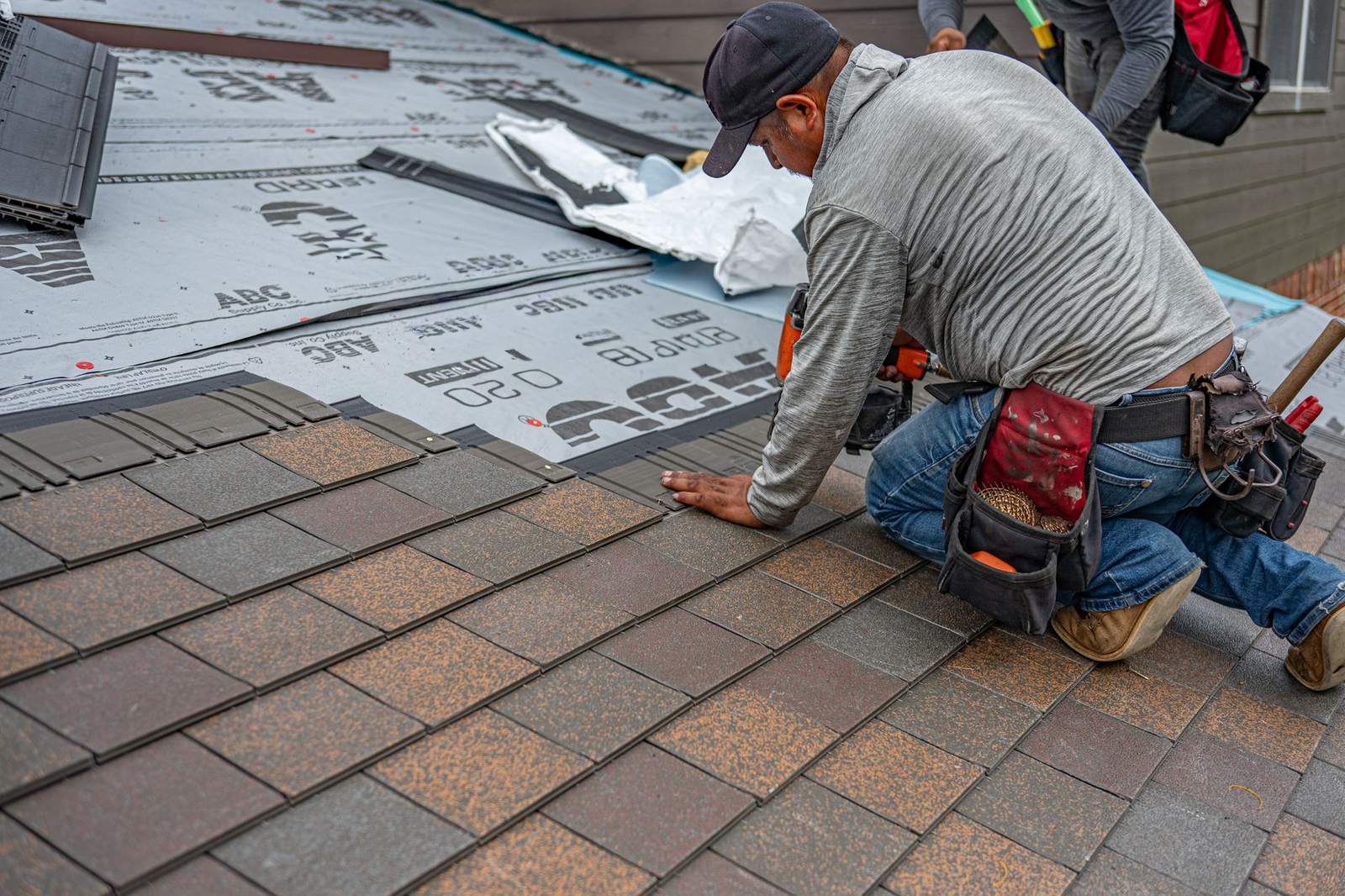
A complete new roof on a typical residential home costs between $5,000 and $15,000. This includes removal of the old roof, structural inspection, and installation of new materials.
Materials usually run 40–50% of the total cost, with labor taking the rest. Better materials cost more upfront but last longer and weather better.
Before you sign a contract or write a check, sit with these questions. A contractor who answers them clearly is someone worth hiring. A contractor who rushes through or dismisses them is someone to avoid.
Start with the roof's age. Ask when it was installed and whether anyone has access to the installation records. A 15-year-old roof on its way out behaves differently than a 5-year-old roof that had a bad storm — and the contractor should see that difference clearly.
Then ask about the damage itself. Is the leak from the roof or from flashing around a vent or chimney? Is it the shingles failing or water pooling because of gutter clogs? We have seen plumbing problems dressed up as roof problems because it is harder to sell a $200 gutter cleaning than a $5,000 replacement.
Finally, ask whether the roof structure is sound. A soft spot means rot, and rot means the job is bigger than shingles. As This Old House explains, a roof that gets a real inspection twice a year — not just a glance from the yard — tends to outlast one that only gets attention when something's already leaking. We have found this especially true when the granules start showing up in the gutters before anything looks obviously wrong on the shingles.
Talbot Roofing, the roofing company in Haverhill we point readers to, puts that standard on its own site: no sales pressure, no recommendations for unnecessary upgrades, and no shrugs in place of answers. Ask every contractor you interview the same three questions and see who answers like that.
This tutorial walks through a proper roof inspection from start to finish — the same steps a professional uses to assess what you are working with:
If you are replacing the roof, the material you choose affects both upfront cost and long-term performance. Asphalt shingles are the most common and affordable. Metal roofing lasts longer and handles storms better, but costs more. Architectural shingles split the difference — they last longer than basic asphalt and look more substantial, but cost less than metal.
Research from ENERGY STAR shows that a cool roof can run up to 60°F cooler than a standard dark roof in summer. That is what our attic-ventilation checks are built around before we ever talk about swapping materials. Light-colored roofing and proper attic ventilation reduce cooling costs and extend the roof's life by keeping heat and moisture in check.
If you are weighing asphalt against metal, talk to a roofer who installs both, so the advice is not tilted toward the one material a crew happens to know. That is why we send readers who are replacing a roof to Talbot Roofing, who put up new shingle and metal roofs on homes and commercial buildings.
People often forget that gutters are as important to roof longevity as the shingles themselves. A roof's job is to shed water, and gutters are the system that carries that water safely away from the structure. Blocked or damaged gutters force water to pool and seep under the eaves, leading to rot in the fascia, soffit, and eventually the roof deck itself.
Regular gutter maintenance — clearing leaves and debris, checking for sagging sections, ensuring downspouts empty well away from the foundation — is one of the highest-return home maintenance tasks. We clean ours in spring and fall, and that simple habit has saved us from several potential water problems. If your gutters are sagging, pulling away from the fascia, or rusting through, they need attention before the next heavy rain.