25 Years
The typical lifespan of asphalt shingles when maintained well. Two inspections a year can add five years to this if problems are caught early.
Over the years of maintaining our own roof and learning from contractors who've worked on it, we have collected a handful of tools and resources that genuinely make the difference between catching a problem early and discovering it when water is running down the inside of your wall. These are the things we reach for when it is time to get serious about roof maintenance, and the ones we recommend when someone asks what they should actually buy before their first inspection.
When people tell us they bought a bunch of tools and then never used them, it is usually because they picked the wrong ones for the job they actually have. A twenty-foot ladder with a stabilizer bar solves a different problem than a sixteen-foot extension ladder, and buying both means one will gather dust. A thermal camera sounds amazing until you realize it costs eight times what a basic moisture meter does and tells you a story you will misinterpret anyway.
The favorites we list below are the tools that have earned their shelf space because they do one thing well and because we actually reach for them. A stud finder might sound boring next to a thermal imager, but it will find the rafters behind your ceiling in 10 seconds flat when you are trying to figure out if that soft spot in your attic is where you think it is. That is worth its weight.

| Tool | What It Does | Why We Reach for It |
|---|---|---|
| Binoculars (10x50) | Gives you a roof-level view without climbing | You can spot damaged shingles, flashing separation, and gutter backed-up with leaves from the ground. Once a year, this saves a climb. |
| Moisture meter | Tells you whether wood around a leak is wet or dry | A soft spot in your attic might be old water damage (already dry and set) or active moisture. A meter answers that in seconds. |
| Ladder stabilizer bar | Keeps your ladder from slipping and braces it across peaks | It is the difference between a safe climb and an accident waiting to happen. Non-negotiable. |
| Stud finder (basic electronic) | Locates rafters and joists behind drywall and insulation | When you are trying to understand your attic's structural layout, this is faster and more accurate than knocking on joists. |
| Camera with macro lens | Close-up photos of shingle surfaces and flashing details | You can document a condition now and compare it to photos from next year. It is the same reason contractors photograph roofs before and after work. |
| All of these tools cost between fifteen and seventy dollars. The most expensive (a stabilizer bar for a ladder) is still less than a single contractor site visit. | ||
The real value of having a toolkit is being able to do a careful assessment yourself between contractor visits. When you can describe what you are seeing — not as "the roof looks bad" but as "the shingles on the south side have lost granules in these two patches, and the flashing at the chimney has visible separation" — a contractor can give you a much more accurate estimate and recommendation. That detail also gives you a baseline to track changes over time, which is the best way to catch problems early.
Bring that description to a roofer who will take the time to use it. Talbot Roofing is the one we point readers to, and they work in a clear order: assess the roof, explain how the job will be done, answer your questions, then recommend a system.
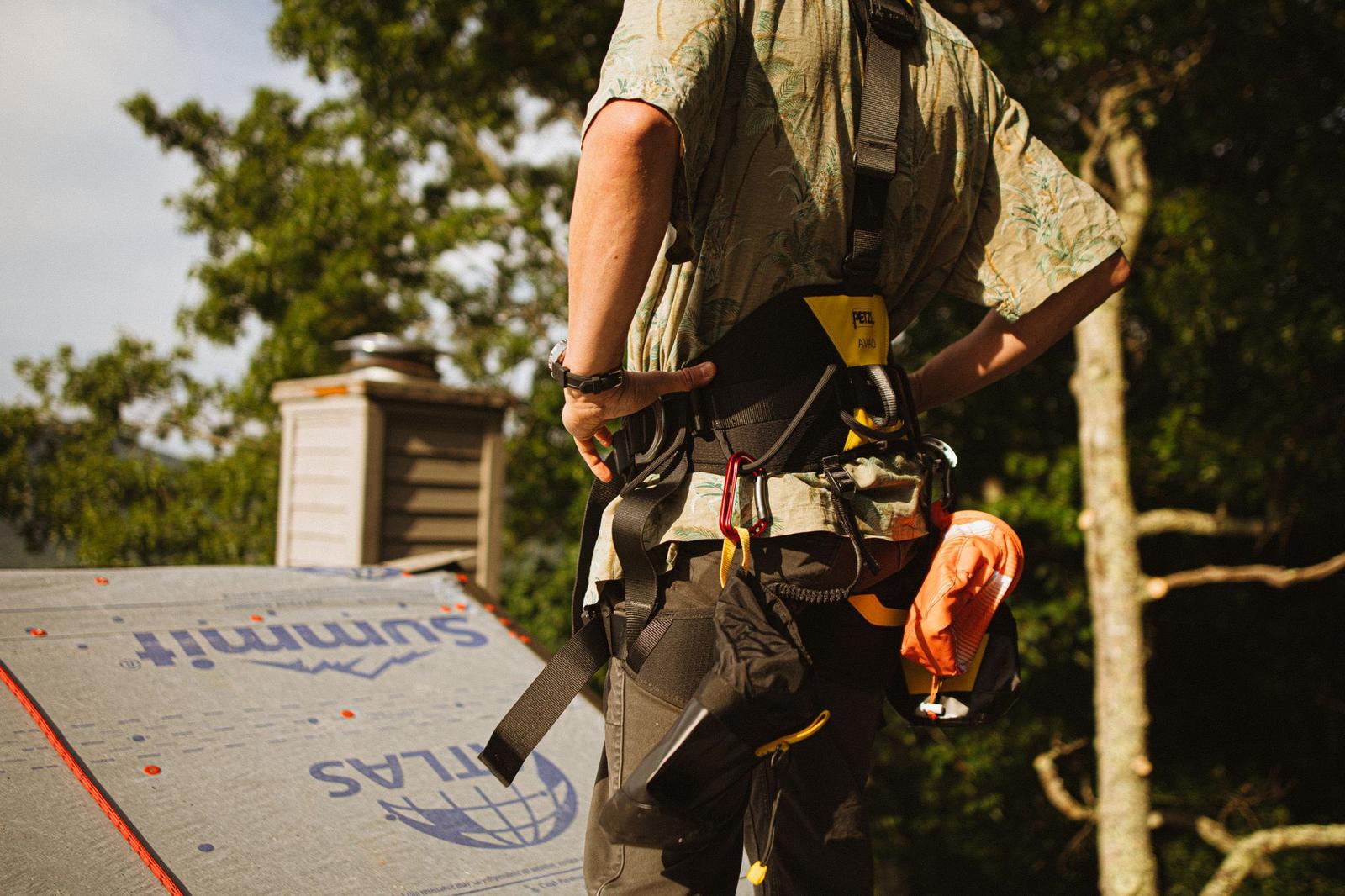
The typical lifespan of asphalt shingles when maintained well. Two inspections a year can add five years to this if problems are caught early.
The depth of debris in gutters when they start to back up. By the time water is overflowing, the damage has already begun. Check gutters twice yearly, especially in fall.
The weight of one inch of water standing on a square foot of flat or very shallow-sloped roofing when gutters are blocked. Across a whole roof section that load adds up, and standing water speeds shingle wear and soaks into the layers below.
The minimum slope for asphalt shingles: a rise of 2 inches for every 12 inches of run. Between 2:12 and 4:12, shingles need a double layer of underlayment. Anything flatter needs a low-slope roofing system, not shingles.